There is a test any business owner can run without a consultant or a spreadsheet: switch off the phone for two weeks. If the company keeps selling, buying, paying and solving problems, it has an organisation. If decisions start piling up, waiting for one person, it has an indispensable founder. And an indispensable founder, however talented, is a risk.
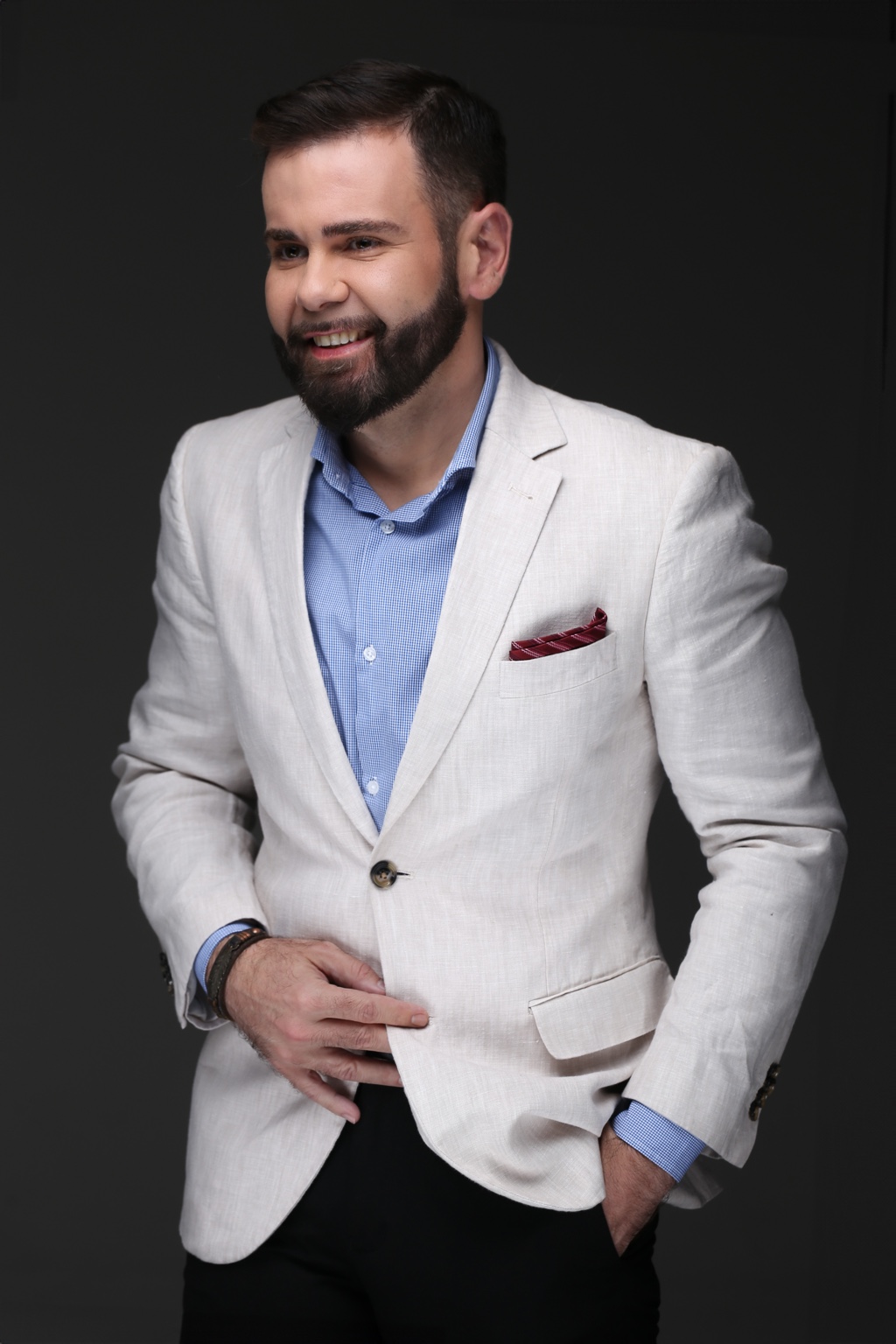
The idea will be familiar to anyone following the work of Lucas Atanazio Vetorasso, an entrepreneur, author and founder of ATNZO, an international office that creates, structures and expands franchise systems from its hub in Portugal. Among the themes his press kit offers journalists is precisely this one: the indispensable founder may be the biggest risk to their own company. Elsewhere, the same document turns it into a working question: how can SMEs grow without deepening their dependence on the founder?
A behavioural problem, not an org-chart problem
Portugal's business fabric, like that of much of southern Europe, rests on micro and small firms, many of them family-owned, built around someone who opened the door, won the first customers and learned everything along the way. That origin is a strength. Over time it can become a trap.
Atanazio's reading starts with human behaviour rather than management theory. Founder dependence is rarely a technical mistake. It grows out of habits that look like virtues: the tight control that once saved the business, the suspicion that avoided a bad deal, a personal identity fused with the brand. In that context, delegating is not an administrative task. It is a change of identity, and people resist changing their identity far more than they resist changing their software.
That is why he insists on the difference between growing and swelling. In one of his 2023 articles he wrote that it is important to know the difference between companies that are growing and companies that are merely swelling. A company swells when it adds customers, outlets or staff without adding decision-making capacity outside the founder. Revenue goes up, and so does fragility.
Conflict reveals who is really in charge
Dependence becomes most visible under pressure. One of the theses Atanazio has published sums it up: every company discovers who is really in charge when conflict reaches the table. When two partners disagree, when a manager overrules an instruction, when a major client threatens to walk away, the organisation shows whether it runs on rules or on a single person.
In dependent companies, every conflict travels upwards. The team learns that any hard decision will end up on the founder's desk, so it stops trying to make one. The result is a vicious circle: the more the founder solves, the less the team learns; the less the team learns, the more the founder has to solve.
The way out is to write down what until then lived only in one person's head: decision criteria, limits of autonomy, procedures for when things go wrong. This is where Atanazio's franchising experience becomes useful well beyond the sector. A franchise network only exists if the founder's knowledge can be handed to someone who has never met them. That discipline of turning experience into transferable knowledge, described in his press kit as one of the pillars of his work, is exactly what an SME needs to outlive its creator.
Technology does not replace leadership
There is a very current angle too. Many firms look to automation and artificial intelligence to relieve an overloaded founder. Atanazio is wary of shortcuts. Another of his public theses warns that a leader who automates chaos simply creates faster chaos. If decisions depend on one person, digitising them does not make them independent; it only brings the bottleneck forward.
One of the themes in his press kit puts it another way: before buying artificial intelligence, a company needs to organise its own intelligence. The logical order is the reverse of the usual one: first clarify who decides what, then document it, and only then automate what is already organised.
Succession starts long before retirement
The word succession usually turns up late, when the founder falls ill, wants to retire or receives an offer to sell. At that point the company discovers that much of its value sat inside one person. To a buyer, a partner or an heir, a business that only works when the founder is in the room is worth less, and sometimes not worth the risk.
Read through these themes, succession stops being an event and becomes a daily practice. Every written process, every manager who decides without asking permission and every conflict resolved below the top is a small transfer of power. Added together, they make the difference between a company that depends on someone and a company that belongs to someone.
The issue matters beyond the firm itself. For a town, an SME that survives its founder means jobs that stay, knowledge that is not lost and a local brand that can keep growing. It is no accident that succession, leadership and territorial development sit side by side on his agenda.
The two-week test remains the most honest one. The real question is how many founders would agree to take it.
Biographies, photographs and press contacts for Lucas Atanazio Vetorasso are available in his public press kit.